Experience
Honey Day in Akner
3 hrsEasyJune–AugustAt Vardan's hives
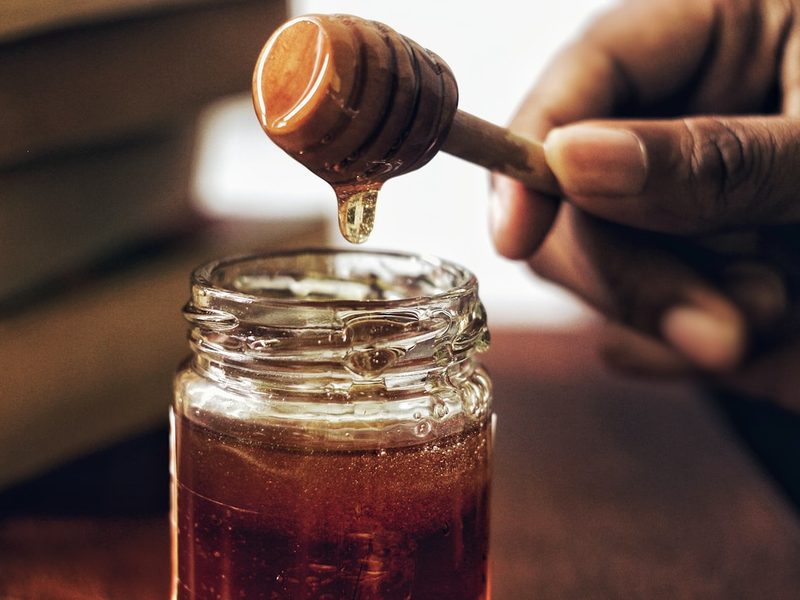
Vardan Hakobyan keeps 40 beehives at the forest edge above Akner village, at roughly 1,450 metres. The hives are positioned where the linden and chestnut trees begin — the two species that produce Lori's most distinctive honeys. Linden honey is light in colour, almost transparent, with a delicate floral taste. Chestnut honey is dark, nearly amber in the jar, with a more complex flavour: slightly bitter edges and an earthy depth. Together, these two plants define the character of Lori honey.
A morning with Vardan is not an organised tour. It's closer to visiting someone's workplace. He'll walk you through the hives, explain the seasonal rotation. His bees don't stay in one place year-round — they move. In May, when apple and wild apricot bloom at lower elevations, the hives come down to around 1,200 metres. As those plants fade and the heat builds, he moves them uphill. In June, they're at 1,400 metres catching the linden bloom. In July and early August, if there's a good harvest, some hives stay with the linden while others move higher still to catch wildflower nectar from mountain meadows. By August, as the flowers begin to fade, the hives move down again to final forage patches.
After the walk through the hives, he'll sit you down at a table outside his gate. On the table: that season's jars. Linden, light and floral. Chestnut, dark and complex. Wildflower, which is different every year depending on what bloomed. You taste them. You ask questions. You understand why these honeys are expensive: the beekeeper has moved them four times this season, managed them through drought and rain, protected them from wasps and other threats. Each jar represents work and knowledge.
Lori honey is not sold in supermarkets. It's sold in jars, at the gate, from people who kept the bees. This is where it comes from. You taste it where it was made. Vardan will sell you honey — the price depends on the quality and type, roughly 2,000–3,500 AMD per jar. There's no pressure. If you don't want to buy, you can still visit and taste. But most people do buy, because it's good honey and you know where it came from.