Place
Kobayr Monastery
3 hoursModerate12th centuryCliff setting
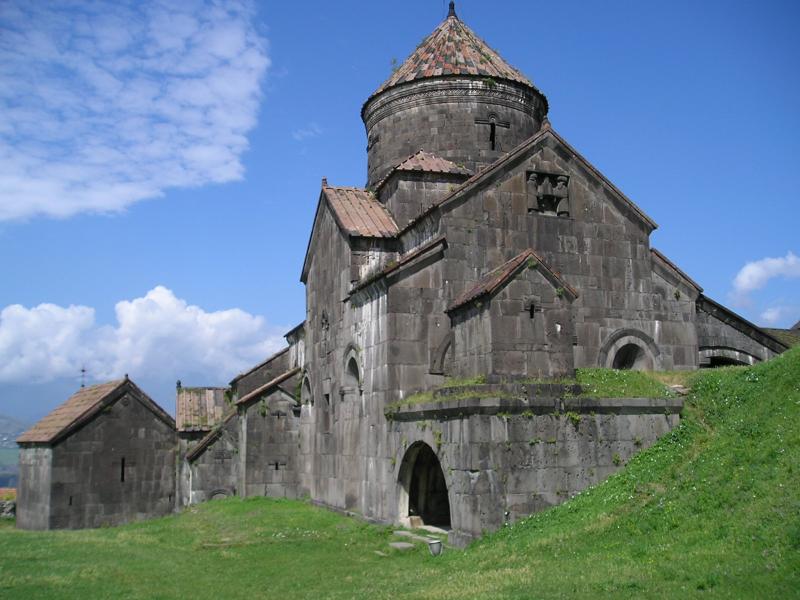
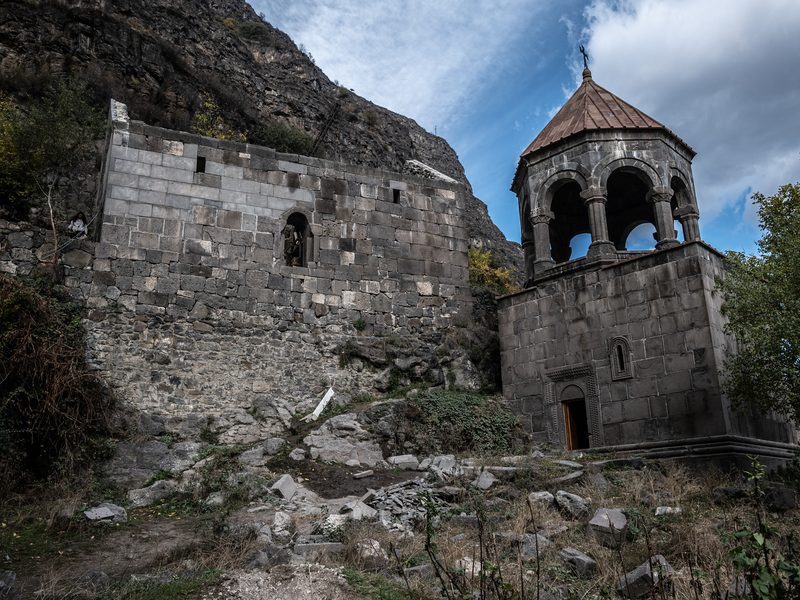
Kobayr is the most dramatically situated of Lori's monasteries—built on a narrow rock ledge partway down the Debed canyon cliff, suspended between river far below and sky above. It is accessible only by a steep path that wasn't fully stabilised until the 1990s, which explains why so few people see it and why those who do never forget it. The approach is thrilling; the arrival is extraordinary.
The monastery is half ruined and half intact—a condition that gives it strange vitality. It was founded in the 12th century by the Georgian Zakarian dynasty, which controlled much of northern Armenia during that period of cultural and political complexity. The architectural and artistic style reflects this dual influence: the building is Armenian in basic form but the frescoes inside are in Byzantine-Georgian style rather than purely Armenian, and there are Georgian inscriptions visible on the walls. This hybrid character makes Kobayr unique in Lori's ecclesiastical landscape. The main hall still has significant fresco coverage on the apse wall—the colour is faded, darkened by centuries of exposure and the moisture that seeps constantly from the cliff, but the composition of the large Deesis (Christ flanked by Mary and John the Baptist) is clearly legible if you stand quietly and let your eyes adjust to the dim interior light. The iconography is recognisably Byzantine: the elongated faces, the formal arrangement, the spiritual intensity.
The physical exposure is part of the experience. Standing inside the monastery, you are aware of the void outside, the drop below, the unprotected ledge on which the building sits. It is not dangerous—the path is sound and the ledge is wider than it appears from below—but your body registers the exposure as real. This heightens everything: the coolness of the stone, the frescoes, the sense of being held by the cliff face. Visitors often sit in silence in the main chamber, watching the light shift across the frescoes and the canyon walls beyond. The site invites reverence not through any remaining active worship but through its sheer strangeness and the skill of the builders who created it.
Kobayr is visible from the main road north of Alaverdi—look for the ruin on the left cliff face as you drive north. The access path starts from a small car park on the road (signed, though the sign is weathered). From the car park, the climb takes 20–25 minutes, gaining about 80 metres through a mix of stone steps and natural terrain. The path has some exposed sections—not dangerous with appropriate footwear and care, but not suitable for those uncomfortable with height. Take your time and test each stone before committing your weight.