Village
Mets Mantash
Half dayEasyYear-round1,250 m
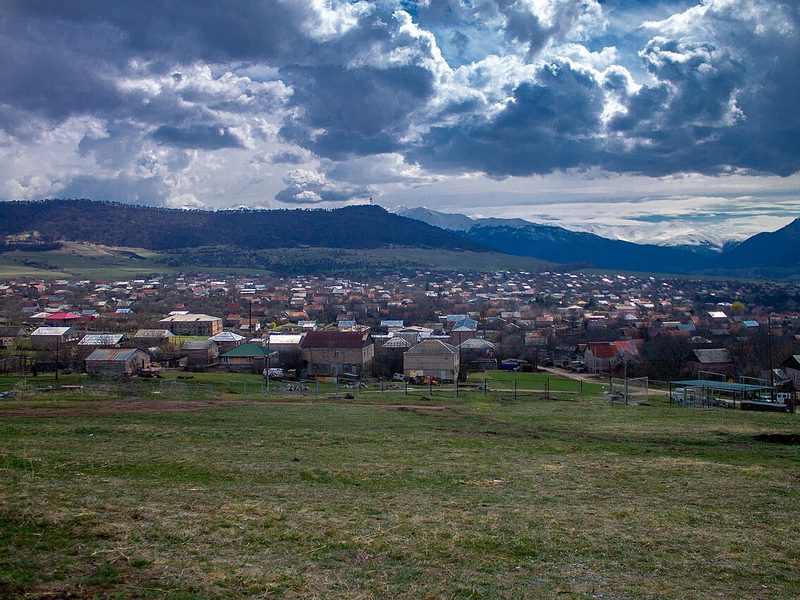
Mets Mantash (Great Mantash) sits on a hillside 12 km south of Stepanavan at 1,250 metres. It's one of Lori's larger villages — around 1,800 people — and has the feel of a place that hasn't changed its essential character since the Soviet period ended. Houses are stone, with tile roofs and gardens enclosed by basalt walls. The roads are unpaved. The church stands at the centre.
The churchyard of Surb Astvatsatsin contains some of the most varied khachkar collection in the Stepanavan area. Medieval stones stand alongside Soviet-era monuments and contemporary memorials, each recording a different moment in the village's history. The medieval khachkars are the most impressive — intricately carved crosses with geometric patterns and plant motifs, their edges worn soft by 500 years of weather. Soviet-era stones are more austere, with portraits of the deceased carved or embedded into the face. Contemporary stones, from the last two decades, are polished granite with modern carving techniques. The cemetery is a record of Mets Mantash in three languages: Armenian, Russian, and the carving styles of different eras.
The village has a small Thursday market where local produce is sold from the back of trucks parked near the central square. What's available depends on the season: in summer, apricots, plums, and beans; in autumn, grapes, pomegranates, and walnuts; year-round, honey in jars, dried herbs tied in brown paper, homemade pickled vegetables, and occasionally cheese from local dairy farmers. The market is active in the morning and gone by mid-day.
Getting there: 12 km south of Stepanavan. A shared taxi from Stepanavan central market costs approximately 300–400 AMD per person and takes 20 minutes. Own car gives more flexibility. Combine with a stop at the Dendropark in Stepanavan (9 km north) or the Dzoraget Gorge Loop (starting point 8 km north).