Place
Odzun Basilica
2 hrsEasyOpen daily6th century
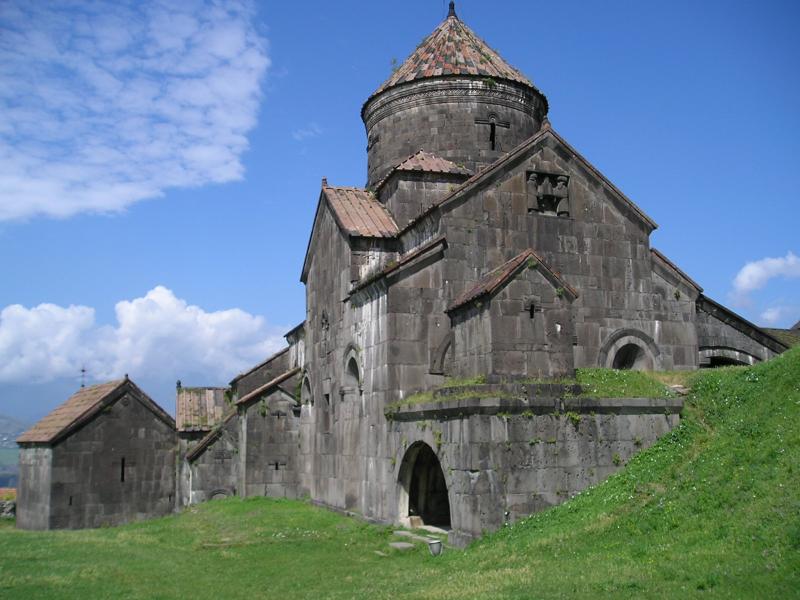
Odzun Basilica is one of the oldest churches in Armenia still standing in near-original form. Built in the late 5th or early 6th century — most scholars place it between 480 and 530 AD — it predates both Haghpat and Sanahin by four centuries. It is not the oldest building in Armenia, but it is among the oldest and among the best preserved.
The basilica sits at the centre of Odzun village, on a wide basalt plateau at 1,100 m above sea level. The plateau drops 400 m vertically to the Debed canyon on its eastern edge — visible from the churchyard. You can stand at the church wall and see directly down the cliff into the gorge. The building itself is a three-nave basilica in the early Armenian style, with the characteristic deep arched windows of the period. The walls are of unmortared basalt — the stone was shaped to fit without adhesive, a technique that has kept the building stable for 1,500 years.
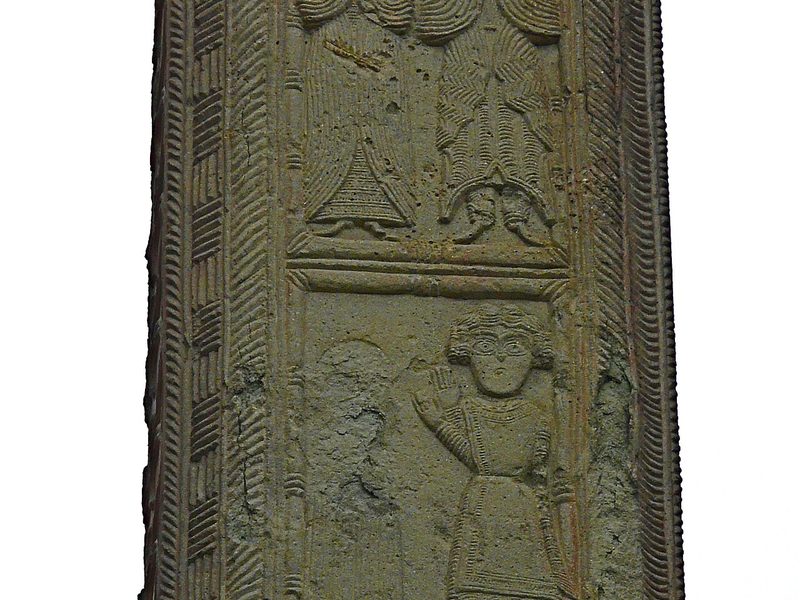
In the courtyard stand two 5th-century memorial stelae, known as tsaghkadzor stelae. They depict biblical scenes in relief carving: one shows a cross and geometric patterns, the other a hunting scene. These are among the oldest surviving examples of Armenian stone relief work. The courtyard wall is scattered with khachkars from various centuries — some medieval, some Soviet-era, some contemporary.
Almost nobody comes to Odzun Basilica. The village is quiet. The church is usually unlocked. There is no entrance fee, no guide, no vendor. What you get is the building, the plateau, the cliff edge, and the weight of fourteen centuries.