I came to Odzun on a Thursday because I was told there was a market. There was. Three trucks, twelve people, and a woman selling honey and dried savory in plastic bags. I bought both and stayed for four hours.
The Thursday Market That Isn't Really a Market
The market happens on Thursdays. No formal structure, no market hall. Just trucks parked at the edge of the village plaza, and people who have something to sell. The honey seller was Anahit. She was standing beside two trucks — one selling produce, one selling meat — and she had maybe fifty plastic bags filled with honey arranged in a wooden crate. The honey was dark. The bags were unlabeled. When I asked where it came from, she said "From the bees."
That turned out to be more informative than it sounds. Anahit's family has kept bees in or near Odzun for three generations. She's not exactly sure how long — her grandmother kept them, her mother kept them, she keeps them. The bees forage on the plateau plants and in the canyon, and the honey tastes like the landscape: peppery from summer savory, dark from whatever grows on stone. She sells what she can't eat. Her children buy honey elsewhere — bottled, labeled, from stores in Alaverdi. She thinks this is normal.
The dried savory was in another set of bags, clipped shut with a clothespin. Two dollars for a bag that would flavor a hundred kilos of meat. I bought both items and then asked if I could sit down.
The Village: Plateau, Church, Edge
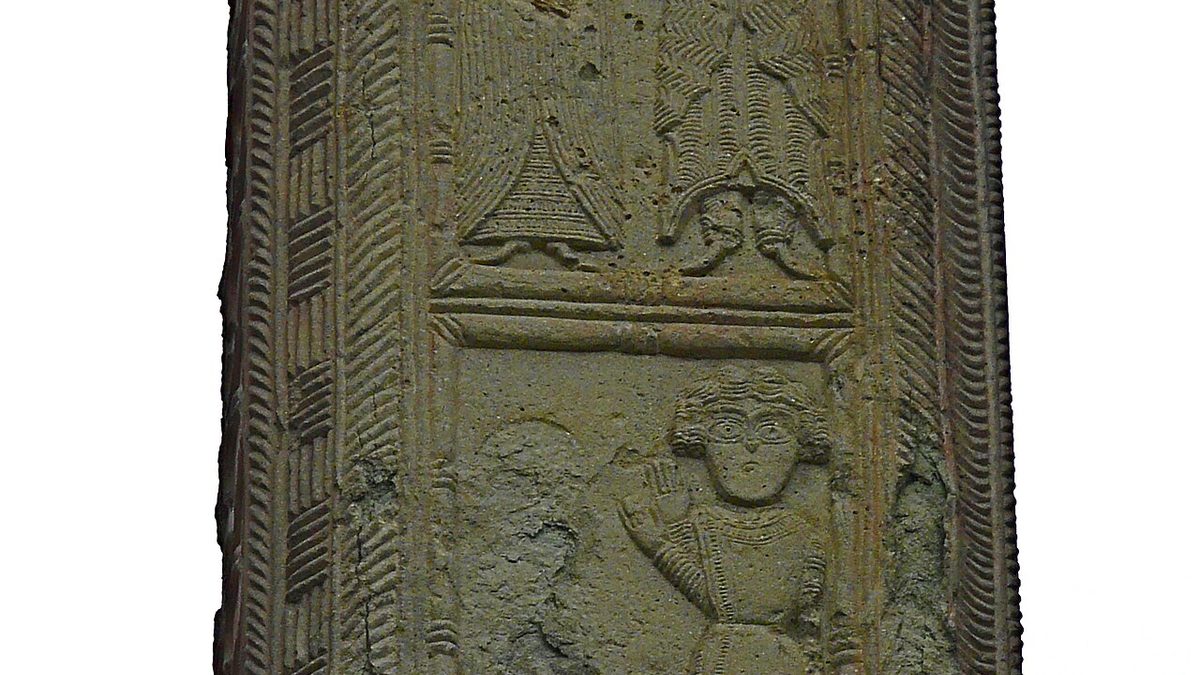
Odzun sits at 1,100 meters, on a plateau that extends east and west. The plateau is bounded by basalt walls and carved into gardens — the typical geometry of Armenian high villages. Every family has a plot of land near the church, and the church sits at the center. It's a 6th-century structure, though the villagers don't refer to it by date or name. It's just "the church." That's sufficient. When they need to specify something, they say "the church at Odzun," but usually they just say "the church" and everyone knows.
Then there's the edge. The plateau ends. Beyond the village limits, the ground drops 400 metres to the canyon floor. The canyon wall is nearly vertical — basalt cliffs, steep enough that nothing grows on large sections of it. You walk to the eastern edge of the village and the bottom falls out of the world.
The View from the Edge
Standing at the edge, you can see the Debed river 400 meters below — not as a river but as a line, a thin thread of water in the distance. The opposite wall of the canyon is similar: vertical cliffs, then a band of forest at the mid-level, then more cliffs at the top. On the opposite cliffside, higher than Odzun, sits Haghpat Monastery on its promontory. You're looking at the monastery eye-level — the only place in the region where you can do this. From everywhere else, Haghpat is either below you or above you. Here, you're level with it. You can see the bell tower. You can see the proportions of the structure. You're standing on one cliff looking at another cliff with a monastery on it, 400 meters of air between you.
This view exists nowhere else. It's not described in guidebooks because tourists don't come here. But it's the most complete understanding of Haghpat's position that you can get — not approaching the monastery from below, but standing across from it at eye level, understanding the monastery's geography the way medieval builders understood it: as a fortress on a promontory, in absolute control of the canyon it overlooks.
Back to the Market
Anahit sat with me for the four hours. She sold maybe eight bags of honey and maybe a dozen bags of savory to people who came by. They stopped, asked prices, bought, and left. No negotiation. No conversation beyond the transaction. She didn't seem to mind. I asked why she came on Thursday if the market was this small, and she said Thursday is when people from Alaverdi come up to visit. If they're coming anyway, they might as well buy honey. If the next person who climbs the road from Alaverdi is passing through, they might as well stop by the truck.
The other vendors were similarly pragmatic. The meat seller knew maybe four regular customers. The produce seller sold to whoever was cooking that night. The honey seller sold to whoever liked honey. There was no expectation of growth. No plan to expand the market. This was how it was, and the assumption was that it would continue being how it was.
The Shared Taxi Home
Getting back to Alaverdi required a shared taxi. I waited at the market until 4 p.m., when Karen drove up in a grey sedan that had seen better days. He was taking passengers back down to Alaverdi, three stops at different villages along the way. One of his passengers was a man carrying two live chickens in a crate. The chickens were loud. The taxi was loud. Karen was friendly and patient and drove with the kind of focus that suggested he'd taken this road ten thousand times and would probably take it ten thousand more.
During the drive down, Karen pointed out a newly renovated house — someone's son from Alaverdi had come back and rebuilt his family home. That was unusual. Most people moved down to Alaverdi or out of the region entirely. Coming back to build in a high village was not the normal trajectory. Karen seemed to consider it admirable, the way you admire something that goes against the sensible course.
Odzun Without Tourism
What struck me most about Odzun was that it didn't seem to be waiting for visitors. The village wasn't built to receive tourists. There are no signs. No restaurants. No guesthouses with English websites. The church is maintained, but for the people who worship in it, not for people passing through. The market happens because life happens. The honey is sold because there's honey and someone buys it. The plateau and the edge and the impossible view of Haghpat across the canyon — these exist whether or not anyone comes to see them.
This is rarer than it should be. Most places orient themselves around the possibility of visitors. Odzun doesn't. Or it does but invisibly, the way an ancient structure orients itself around gravity — so completely that orientation isn't visible. The village is what it is. If you find yourself there on Thursday with money and a taste for honey, you're welcome. If you don't, that's fine too. The bees will make honey next year. The plateau will stay 400 meters above the canyon. Karen will drive down the road.